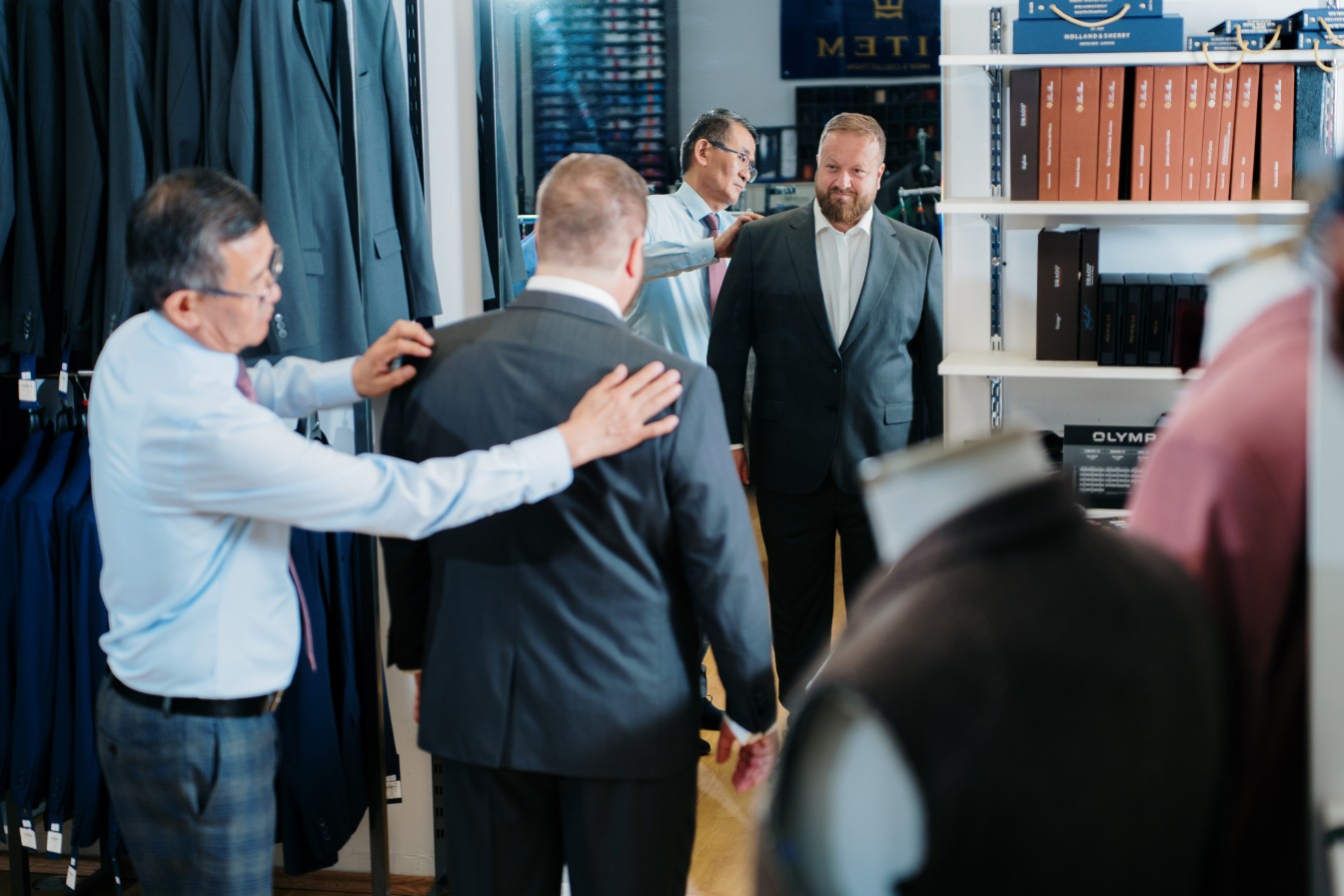
For some, shopping is an enjoyable pastime. For others, it’s simply a task to be completed as quickly as possible. It’s not difficult to notice that most men—especially when it comes to clothing—belong to the latter group. They want to get it over with as fast as possible, with minimal trying on. But why is that?
1. A Function-Oriented Mindset
Men’s shopping habits are typically goal-driven. They enter a store with a specific purpose—looking for a pair of trousers, for example—and once they find a suitable one, the process is finished. For them, shopping is more of a task than an experience, which is why they are reluctant to explore multiple alternatives. This differs from women’s shopping habits, where discovery and inspiration are often part of the enjoyment.
2. Negative Past Experiences
For many men, clothing selection is associated with unpleasant childhood or teenage memories: long fitting sessions, sizing inconsistencies, poor lighting, unflattering mirrors, or overly pushy sales staff. These experiences can leave a lasting impression, and as adults, many prefer to avoid similar situations whenever possible.
3. Time Efficiency and Priorities
Many would rather relax or focus on their hobbies than go from store to store. Sartorial purchases therefore become an obligation they aim to complete in the shortest possible time. This mindset also appears in online shopping—many order from familiar sources simply to avoid browsing and multiple fittings.
4. Comfort Zones and Wardrobe Habits
Many men wear the same styles and brands for years because familiarity provides security. Shopping often means replacing existing wardrobe staples rather than experimenting or renewing their style. That’s why, once they find a reliable garment, they may buy several of the same.
5. Too Much Choice, Decision Fatigue
Today’s wide product selections can be overwhelming. Those who do not closely follow sartorial trends may easily become uncertain about what complements their frame. Too many options can create stress and make decision-making difficult. Psychology refers to this as “decision paralysis”: the more options available, the harder it becomes to choose—and the less refined the process feels.
6. Social Roles and Expectations
Traditionally, men’s socialization has not emphasized attire as a form of self-expression. For a long time, acquiring a suit was about fulfilling a necessity rather than engaging in a creative sartorial process. Although this is changing, old patterns still influence behavior.